What Is Bruxism?
Bruxism is excessive grinding or clenching of the teeth when an individual is not chewing or swallowing.
It is usually a subconscious activity and can occur in both children and adults.
Bruxism may happen while a person is awake or during sleep. A person with nighttime bruxism may not even realise that they are grinding their teeth.
Occasional clenching may not cause significant harm, but continuous and vigorous grinding can damage teeth and surrounding structures.
Types of Bruxism
Bruxism can broadly be classified into two types: daytime bruxism and nighttime bruxism.
Daytime or Diurnal Bruxism
Daytime bruxism refers to grinding or clenching of the teeth while a person is awake.
It may occur consciously or subconsciously. Some people clench their teeth when concentrating, working under pressure or experiencing stress.
Nighttime or Nocturnal Bruxism
Nighttime bruxism occurs during sleep and is usually subconscious.
Because the individual is asleep, they may not know that they grind their teeth. A spouse, parent or family member may notice the grinding sound during sleep.
Morning jaw discomfort, headache or tired facial muscles may also indicate nighttime grinding.
Causes of Bruxism
Although daytime and nighttime bruxism can produce similar damage to teeth, the factors associated with each may be different.
- Bruxism may be associated with stress, anxiety and anger.
- Malocclusion or an improper bite may contribute to grinding or clenching in some patients.
- Missing, irregular or crooked teeth may affect the way the teeth meet.
- Teeth grinding may sometimes be noticed during childhood while permanent teeth are erupting.
- Family history may play a role in some cases.
- Children whose parents have bruxism may also show a tendency toward grinding.
- Highly competitive or stressful working environments may contribute to clenching habits.
Signs and Symptoms of Bruxism
Bruxism often occurs subconsciously. Because of this, the problem may not be obvious in its early stages.
Many patients only become aware of teeth grinding after symptoms or visible tooth changes begin to develop.
Morning Headache
People who grind their teeth during sleep may experience headaches after waking in the morning.
Jaw Pain and Muscle Fatigue
Continuous clenching keeps the jaw muscles active for long periods and can contribute to tenderness, tired facial muscles or jaw discomfort.
Worn Teeth
Attrition or wearing down of the biting surfaces is one of the classic dental signs associated with chronic bruxism.
Tooth Mobility
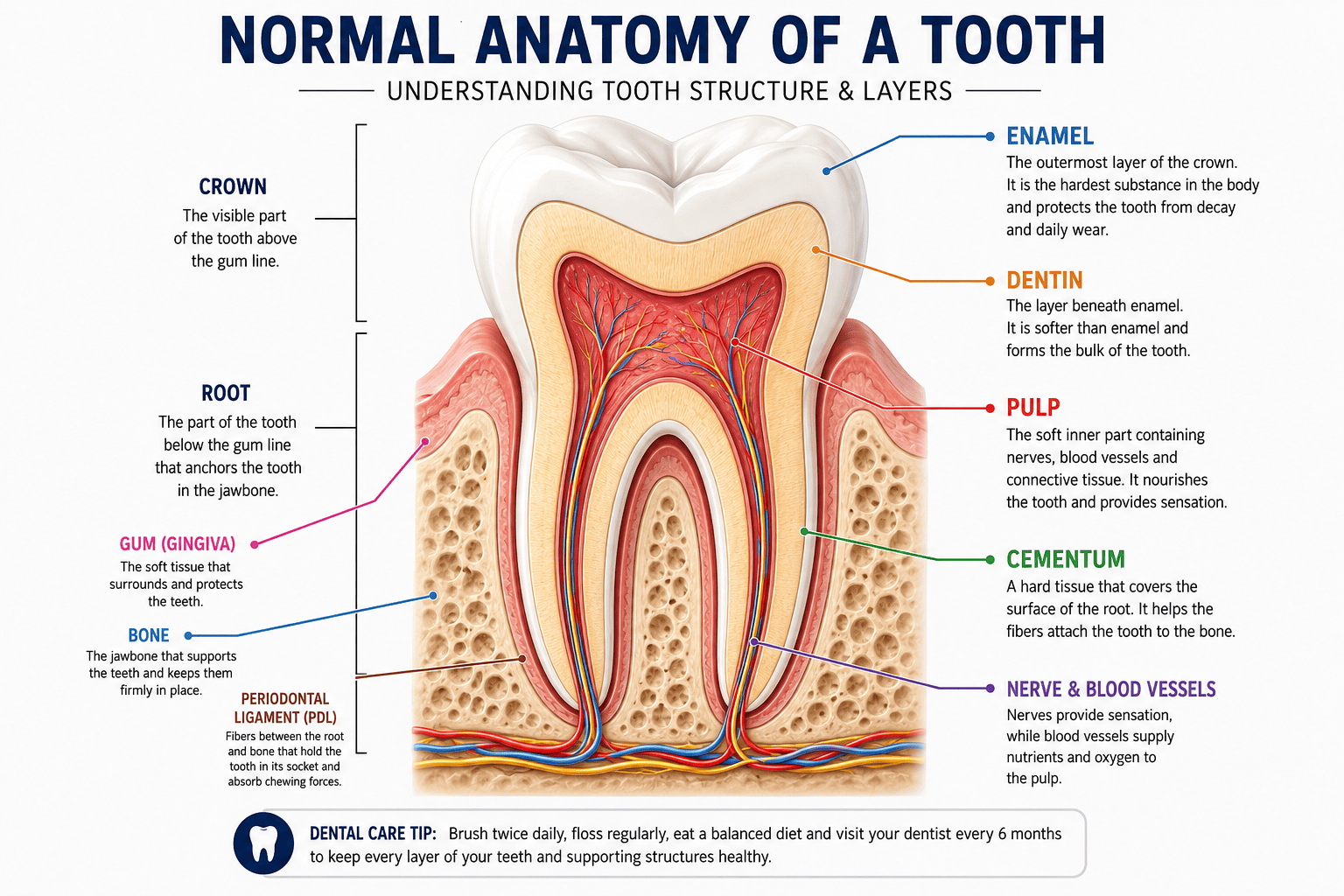
Repeated excessive forces may place stress on the supporting structures around the teeth and can contribute to mobility in affected teeth.
Tooth Fracture
Persistent grinding places repeated force on the teeth and may contribute to cracks, fractures or damage to existing dental restorations.
Gum and Bone Problems
Excessive forces may be transmitted from the teeth to the periodontal tissues and surrounding jaw bone. Patients with existing periodontal problems may require additional evaluation.
TMJ Discomfort
Bruxism may be associated with discomfort around the temporomandibular joint or TMJ.
Some patients may experience a dull ache, restricted jaw movement or clicking sounds around the joint.
Persistent morning jaw pain, frequent headaches, visibly worn teeth, tooth fractures or repeated clenching should be evaluated by a dentist.
How Teeth Grinding Can Damage Your Teeth
The effect of bruxism depends on how frequently and how strongly a person grinds or clenches their teeth.
- Wearing down of the biting surfaces.
- Flattened or shortened teeth.
- Cracks or fractures in teeth.
- Damage to fillings, crowns or other restorations.
- Tooth sensitivity when tooth structure becomes worn.
- Jaw muscle fatigue.
- Headaches associated with muscle tension.
- Stress on the jaw joint.
Treatment and Management of Bruxism
Treatment for bruxism depends on the cause, severity of grinding and condition of the teeth and jaw.
Stress Management
Stress and anxiety are commonly associated with clenching and grinding.
Relaxation techniques and reducing unnecessary stress may help some patients control daytime clenching.
Become Aware of Daytime Clenching
Patients with daytime bruxism can try to become more aware of when they are clenching their teeth.
When the jaw is relaxed, the teeth normally should not remain tightly pressed together.
Avoid Unnecessary Chewing Habits
Avoid habits that unnecessarily overwork the jaw muscles.
- Avoid excessive chewing gum.
- Avoid chewing pencils or pens.
- Avoid biting hard objects unnecessarily.
- Try to keep the jaw relaxed when not eating.
Night Guard for Teeth Grinding
A dental night guard may be recommended for patients who grind their teeth while sleeping.
A night guard is a protective appliance placed over the teeth. It helps provide a barrier between the upper and lower teeth and may reduce direct wear caused by grinding.
A properly fitted dental night guard can help protect teeth from the damaging effects of nighttime grinding. The type of appliance should be selected after a dental examination.
Treat Existing Dental Damage
If grinding has already caused significant tooth wear, cracks or damage to restorations, the dentist may recommend appropriate restorative treatment after examining the teeth.
Regular Dental Check-Ups
Regular dental visits help monitor tooth wear, fractures, gum condition, bite changes and jaw symptoms associated with bruxism.
When Should You See a Dentist?
Consider a dental examination if you notice any persistent symptoms that may suggest bruxism.
- Frequent morning headaches.
- Jaw pain after waking.
- Clicking or discomfort around the jaw joint.
- Teeth that appear shorter or flattened.
- Cracked or chipped teeth.
- Unexplained tooth sensitivity.
- A family member hearing teeth grinding while you sleep.
- Frequent clenching during stressful situations.
Conclusion
Bruxism may occur while awake or during sleep and can remain unnoticed until symptoms such as jaw pain, headaches or visible tooth wear begin to appear.
Persistent grinding or clenching can place unnecessary stress on teeth, jaw muscles and supporting structures.
Stress management, awareness of daytime clenching, avoiding unnecessary chewing habits, using a night guard when advised and attending regular dental examinations can help manage the effects of bruxism.
If you notice signs of teeth grinding or persistent jaw discomfort, patients in Thane can consult the DentoXpert Dental Team for assessment of the teeth, bite and jaw.
Frequently Asked Questions
What is bruxism?
Bruxism is excessive grinding or clenching of teeth when a person is not chewing or swallowing.
What are the two main types of bruxism?
Bruxism can occur during the day as daytime or diurnal bruxism, or during sleep as nighttime or nocturnal bruxism.
Can stress cause teeth grinding?
Stress, anxiety and anger may be associated with bruxism, particularly daytime clenching.
Can bruxism cause jaw pain and headaches?
Yes. People who grind their teeth, particularly during sleep, may experience morning headaches, jaw discomfort and tired facial muscles.
Can teeth grinding damage teeth?
Persistent grinding may wear down teeth and can contribute to cracks, fractures, sensitivity or damage to restorations.
Does a night guard stop teeth grinding?
A night guard primarily helps protect the teeth from direct grinding forces. The underlying causes of bruxism may still require separate management.
When should I visit a dentist for bruxism?
See a dentist if you have persistent jaw pain, morning headaches, worn teeth, tooth fractures, sensitivity or if someone notices that you grind your teeth during sleep.