Introduction
Before understanding plaque, cavities, sensitivity and other dental problems, it is useful to know the normal anatomy of a tooth. A tooth is not a single solid structure. It is made of different layers and supporting tissues, and each part has a specific role in keeping the tooth strong, stable and functional.
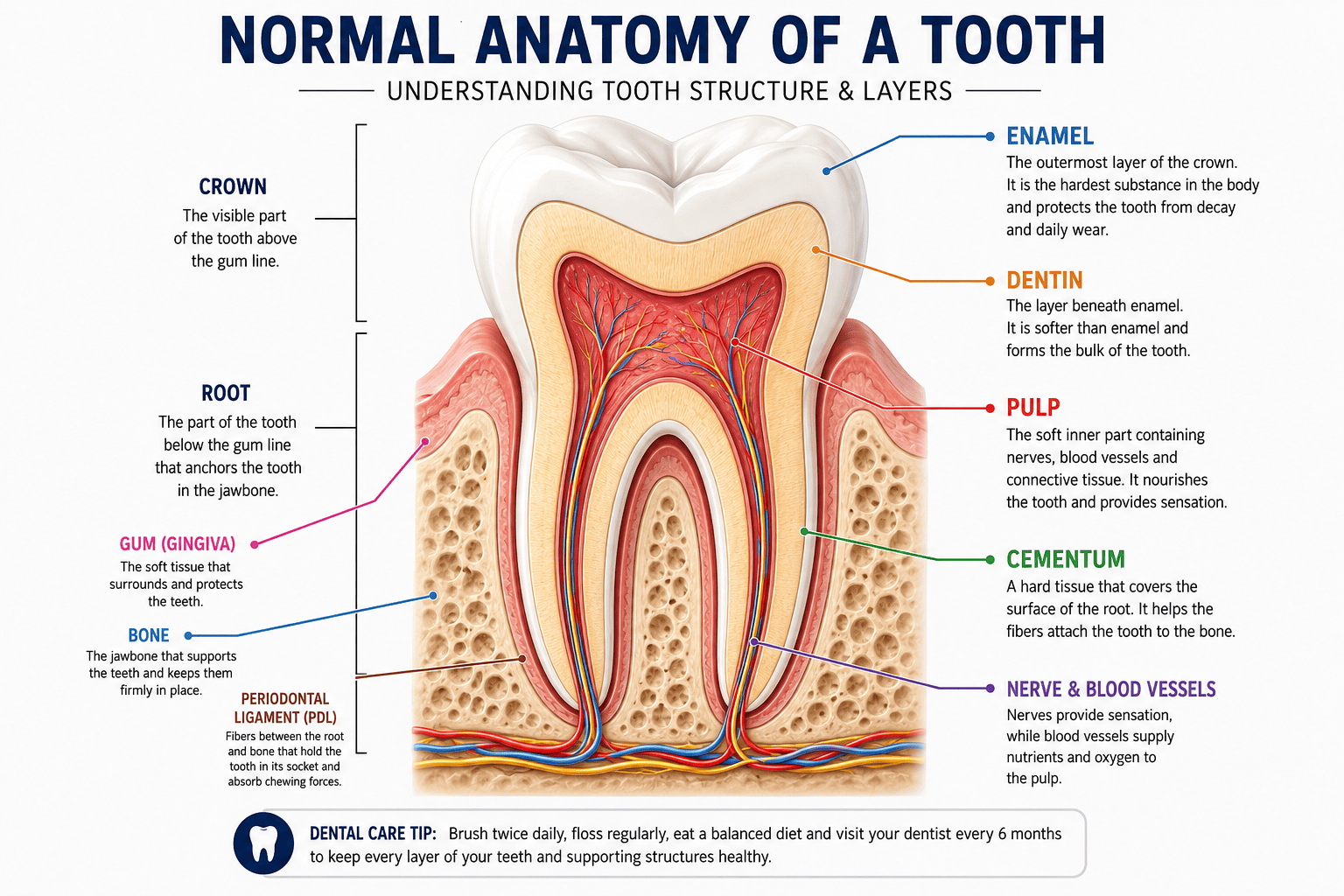
A tooth has two main visible and hidden portions: the crown, which is seen above the gum line, and the root, which is held inside the jaw bone.
Crown and Root of a Tooth
Crown
The crown is the part of the tooth that is normally visible in the mouth. Its shape depends on the type of tooth and the work it performs, such as cutting, tearing or chewing food.
Root
The root lies below the gum line and anchors the tooth within the jaw. Depending on the tooth, there may be one or more roots. The root also contains pathways through which nerves and blood vessels reach the pulp.
Main Layers of a Tooth
1. Enamel
Enamel is the outermost layer covering the crown of the tooth. It is the hardest substance in the human body and protects the inner tooth from everyday chewing forces, temperature changes and bacterial acids.
Although enamel is very strong, it can gradually lose minerals when exposed repeatedly to acids produced by plaque bacteria.
2. Dentin
Dentin is the second layer and lies directly beneath the enamel. It is softer than enamel and makes up a large part of the tooth.
Dentin contains microscopic tubules that can transmit sensations toward the pulp, which is one reason exposed dentin may cause tooth sensitivity.
3. Pulp
The pulp is the soft central part of the tooth. It contains nerves, blood vessels and connective tissue. These tissues help nourish the tooth and provide sensation.
When deep decay or injury reaches the pulp, pain or infection may develop and dental treatment may be required.
4. Cementum
Cementum is a hard tissue that covers the surface of the tooth root. It helps the fibres around the root attach the tooth to the supporting bone and contributes to the stability of the tooth.
Supporting Structures Around the Tooth
Healthy teeth depend not only on the tooth itself but also on the tissues that surround and support it. These structures help keep the tooth stable during biting and chewing.
- Gums (Gingiva): Soft tissue that surrounds the teeth and protects the underlying supporting structures.
- Jaw Bone: The bone around the tooth roots that provides structural support.
- Periodontal Ligament: Fine fibres between the root and bone that help hold the tooth in its socket and absorb chewing forces.
- Blood Vessels: Supply oxygen and nutrients to the living tissues inside the tooth.
- Nerves: Allow the tooth to sense pressure, temperature and pain.
Why Understanding Tooth Layers Matters
Dental problems can affect different parts of the tooth depending on how far the condition has progressed. Early decay may remain limited to enamel, while deeper decay can reach dentin and eventually the pulp.
- Damage limited to enamel may not always cause pain.
- When dentin becomes exposed, sensitivity may develop.
- When the pulp becomes inflamed or infected, stronger pain may occur.
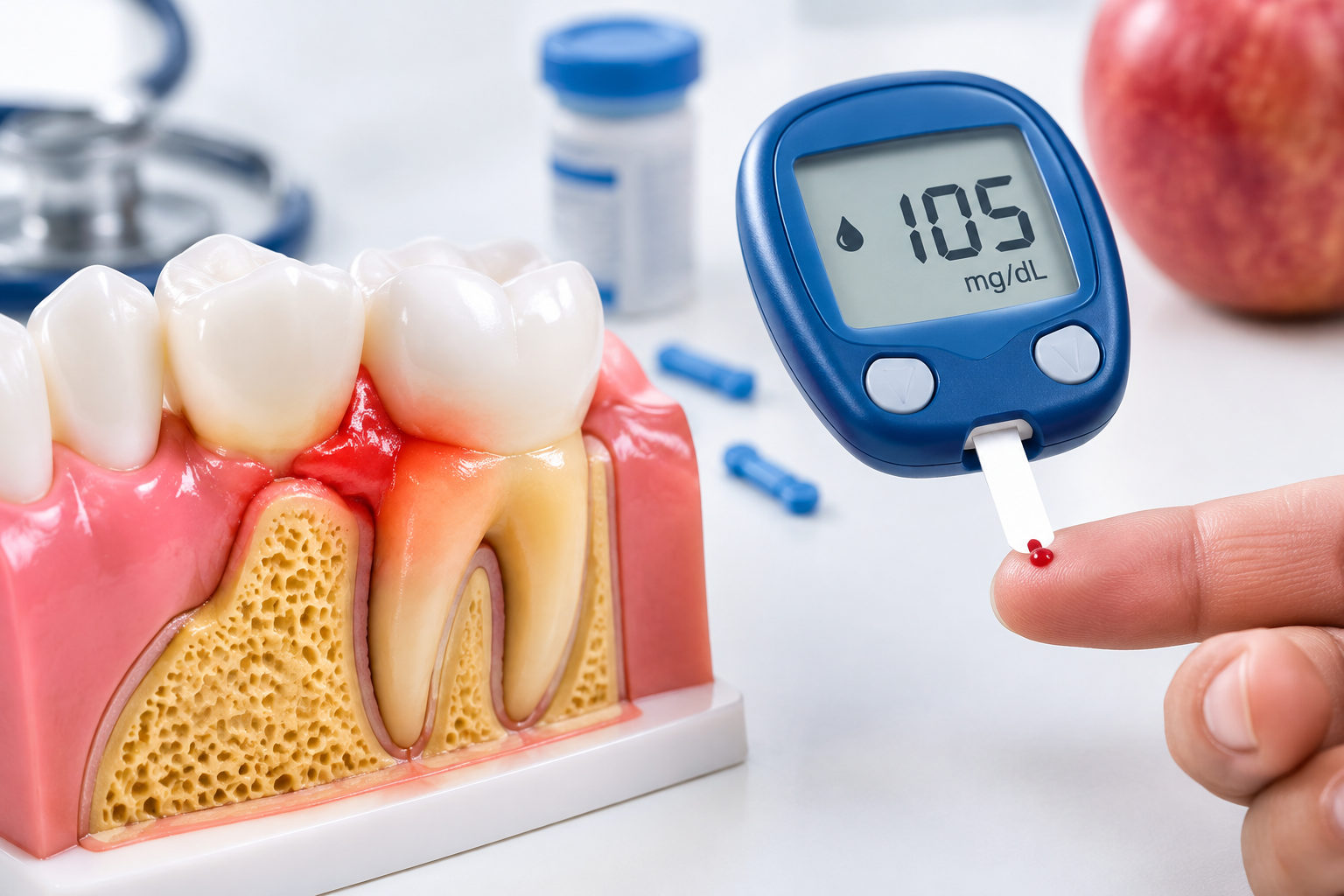
- Gum and bone disease can affect the supporting structures around the tooth.
Tooth pain, prolonged sensitivity, swelling, bleeding gums or a visible cavity should be assessed by a dentist. The required treatment depends on which tooth or supporting structures are affected.
How to Protect Your Teeth and Their Layers
- Brush twice daily using a fluoride toothpaste.
- Clean between teeth using floss or an interdental brush.
- Limit frequent sugary and acidic snacks and drinks.
- Rinse with water after meals when brushing is not possible.
- Avoid using teeth to open packages or bite very hard objects.
- Attend regular dental check-ups and professional cleaning as advised.
- Seek dental care early if you notice sensitivity, pain, swelling or a broken tooth.
Conclusion
The crown, root, enamel, dentin, pulp, cementum, gums, bone, blood vessels and nerves work together to form and support a healthy tooth. Understanding these basic structures makes it easier to recognise why dental problems should be treated before they progress into deeper layers.
If you have tooth pain, sensitivity, cavities or gum concerns, a dental examination can help identify which part of the tooth is affected. Patients in Thane can consult the DentoXpert Dental Team for appropriate diagnosis and treatment guidance.
Frequently Asked Questions
What are the main parts of a tooth?
A tooth has two main portions: the crown above the gum line and the root below the gum line. Internally, it contains enamel, dentin and pulp, while cementum covers the root surface.
What is the hardest layer of a tooth?
Enamel is the outermost and hardest layer of the tooth. It protects the softer dentin and pulp underneath it.
Why does exposed dentin cause sensitivity?
Dentin contains tiny tubules that can transmit changes in temperature or pressure toward the pulp, which may result in sensitivity when dentin becomes exposed.
What is present inside the pulp of a tooth?
The pulp contains nerves, blood vessels and connective tissue that help nourish the tooth and provide sensation.
When should I visit a dentist for tooth pain?
Persistent pain, prolonged sensitivity, swelling, visible cavities, broken teeth or bleeding gums should be evaluated by a dentist so the affected tooth layer or supporting tissue can be identified.