Tooth Pain or Sensitivity
Discomfort while eating, drinking or chewing may indicate decay, infection or another dental concern.
Comfortable, age-appropriate dental care for infants, children and teenagers, with a focus on prevention, early diagnosis and clear guidance for parents.
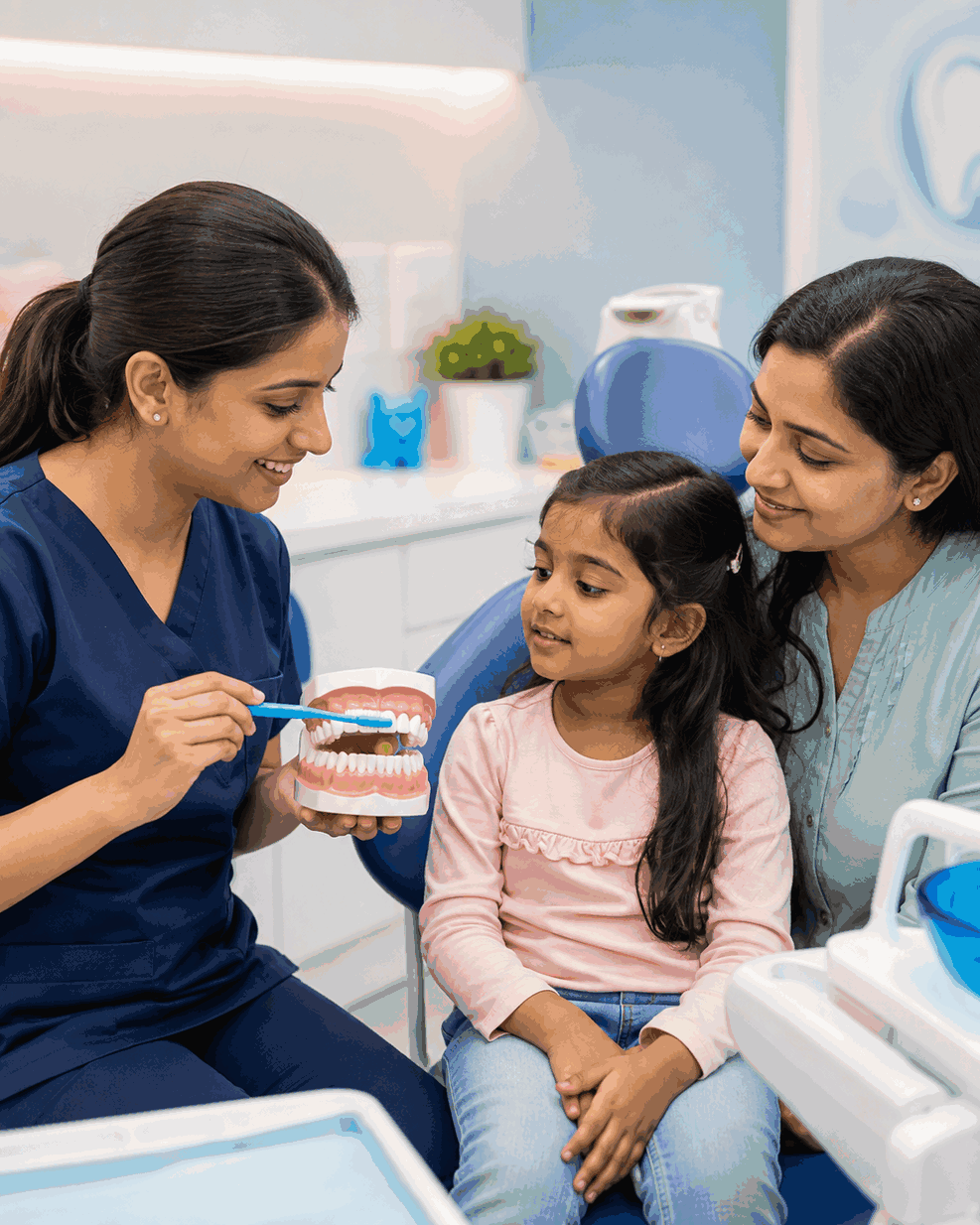
Routine visits are valuable even when no symptoms are present. They support preventive care and help children become familiar with the dental environment.
Discomfort while eating, drinking or chewing may indicate decay, infection or another dental concern.
White, brown or black areas should be checked before the damage becomes deeper.
Redness, swelling, bleeding or a small pimple near a tooth may be linked to irritation or infection.
Pain or avoiding one side of the mouth may be linked to a damaged, decayed or sensitive tooth.
Dental injuries should be checked promptly, even when the child does not have severe pain.
Early assessment helps monitor eruption, spacing, jaw growth and bite development.
Pediatric dentistry covers oral care from infancy through adolescence. It includes baby teeth, developing permanent teeth, gums, bite and oral habits.
Regular visits can identify decay, enamel concerns, delayed or irregular tooth eruption and cleaning difficulties before they become more complicated.
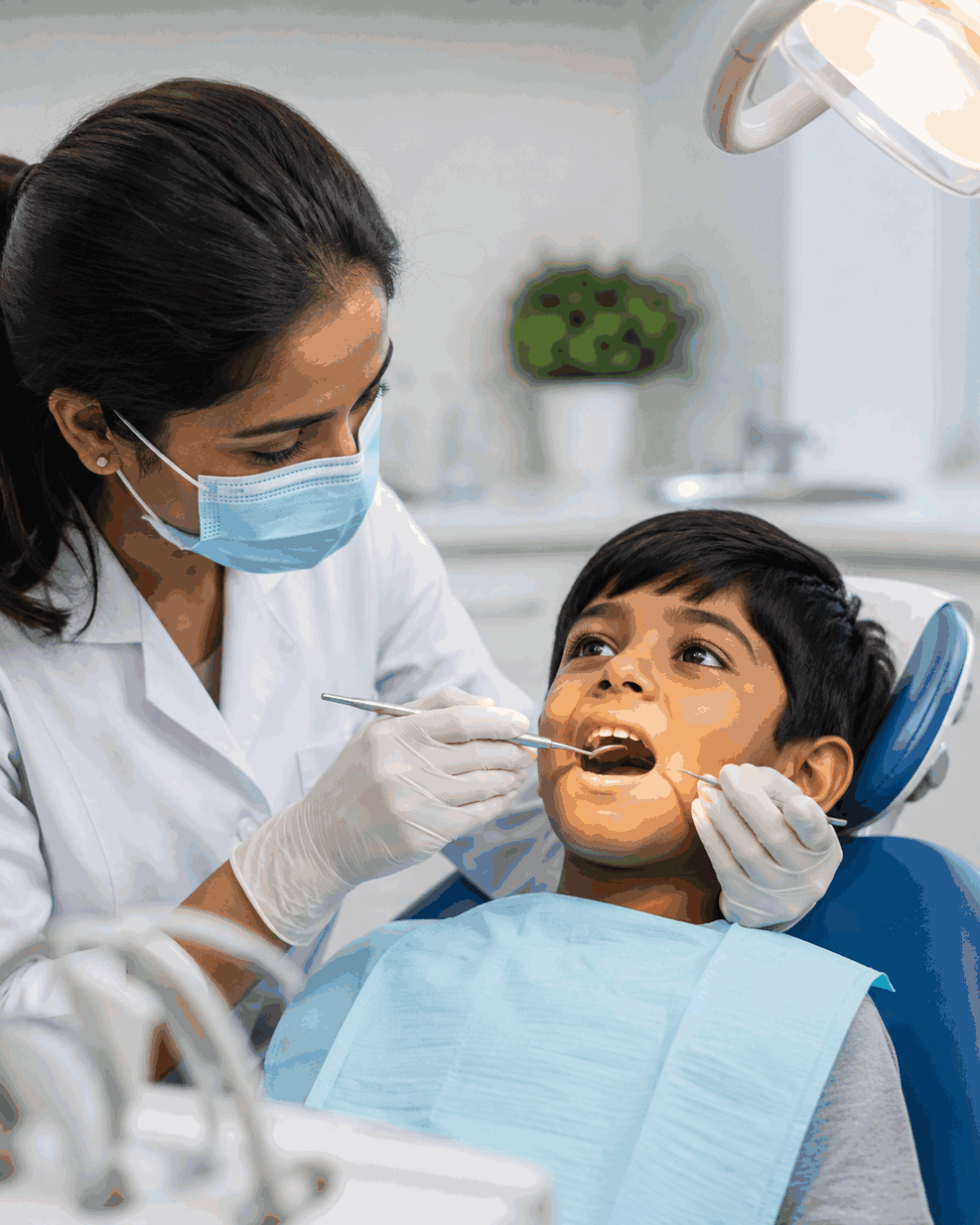
The recommended care depends on examination findings. Parents are informed about the need, available options and aftercare before treatment begins.

Regular check-ups monitor developing teeth, gums, bite and jaw growth.
Plaque and deposits are removed with age-appropriate brushing guidance.
Fluoride may be advised to strengthen enamel and reduce cavity risk.
A protective coating may be placed in suitable grooves of back teeth.
Cavities may be restored with a suitable filling material to protect the tooth.
The cause of discomfort is identified before treatment is recommended.
Chipped, broken, displaced or knocked-out teeth are assessed promptly.
Tooth eruption, crowding, bite development and oral habits can be monitored.
Simple explanations, an age-appropriate examination and a comfortable pace can help children understand what will happen and become familiar with the dental setting.
The visit begins with the child’s health, dental history, habits and current concerns.
The dentist examines the teeth, gums and bite and recommends X-rays only when clinically needed.
Children are introduced to the visit using clear language without creating unnecessary fear.
Options, comfort measures, expected cooperation and the number of visits are discussed.
Preventive advice should be personalised. Toothpaste quantity, fluoride use, diet and review intervals depend on the child’s age, health history and cavity risk.
Examinations and treatment are planned according to the child’s age and dental condition.
Visits focus on identifying concerns early and reducing future dental problems.
Parents and children receive clear explanations before treatment begins.
Care options are based on examination findings and the child’s needs.
Parents receive practical advice for brushing, diet and oral habits.
Access pediatric dental examinations and treatment planning at DentoXpert in Thane.
Recommendations are based on the child’s age, examination findings, dental development and individual treatment needs.
Baby teeth support eating, speech and space for permanent teeth. Untreated decay can cause pain or infection. Treatment depends on the tooth, its expected remaining time and the extent of decay.
Tell the clinic before the visit. A calm introduction and age-appropriate behaviour guidance may help, although cooperation varies and some children need additional appointments or specialist support.
X-rays are recommended only when they are expected to help diagnosis or treatment planning. The dentist selects the type and timing according to the child’s individual need.
No. These preventive treatments are advised according to tooth development, cavity risk and clinical findings.
Visit DentoXpert Dental Clinic for a child-friendly examination, preventive guidance and treatment planning based on your child’s age, comfort and dental needs.