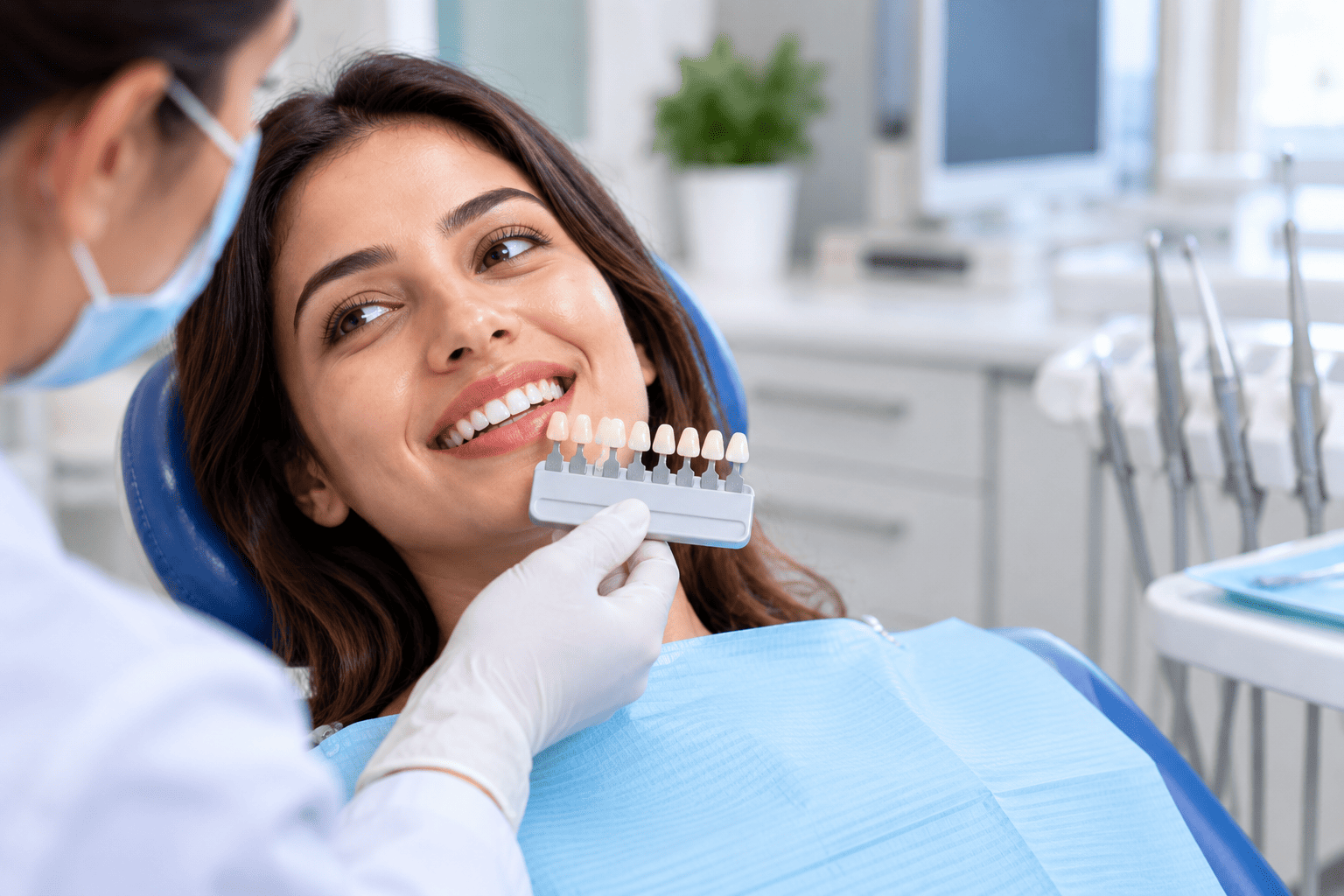
What Is Tooth Bleaching?
Tooth bleaching is a cosmetic dental procedure used to make teeth appear lighter and brighter. It can help improve the appearance of teeth that have become stained or discoloured over time.
Tooth colour can change because of age, food habits, tobacco, beverages, medicines, trauma or other dental conditions. Bleaching works mainly by using peroxide-based agents that act on stains present within the tooth.
Tooth bleaching helps lighten stains and improve the appearance of discoloured teeth, but the final result depends on the type and cause of the staining.
How Does Bleaching of Teeth Occur?
Carbamide peroxide reacts with water and forms hydrogen peroxide. When the bleaching material is applied to the tooth surface, hydrogen peroxide passes through the enamel and reaches the dentin.
It acts on stains present inside the tooth and helps make them lighter. As these stains become lighter, the teeth can appear brighter and whiter.
Reasons for Discolouration of Teeth
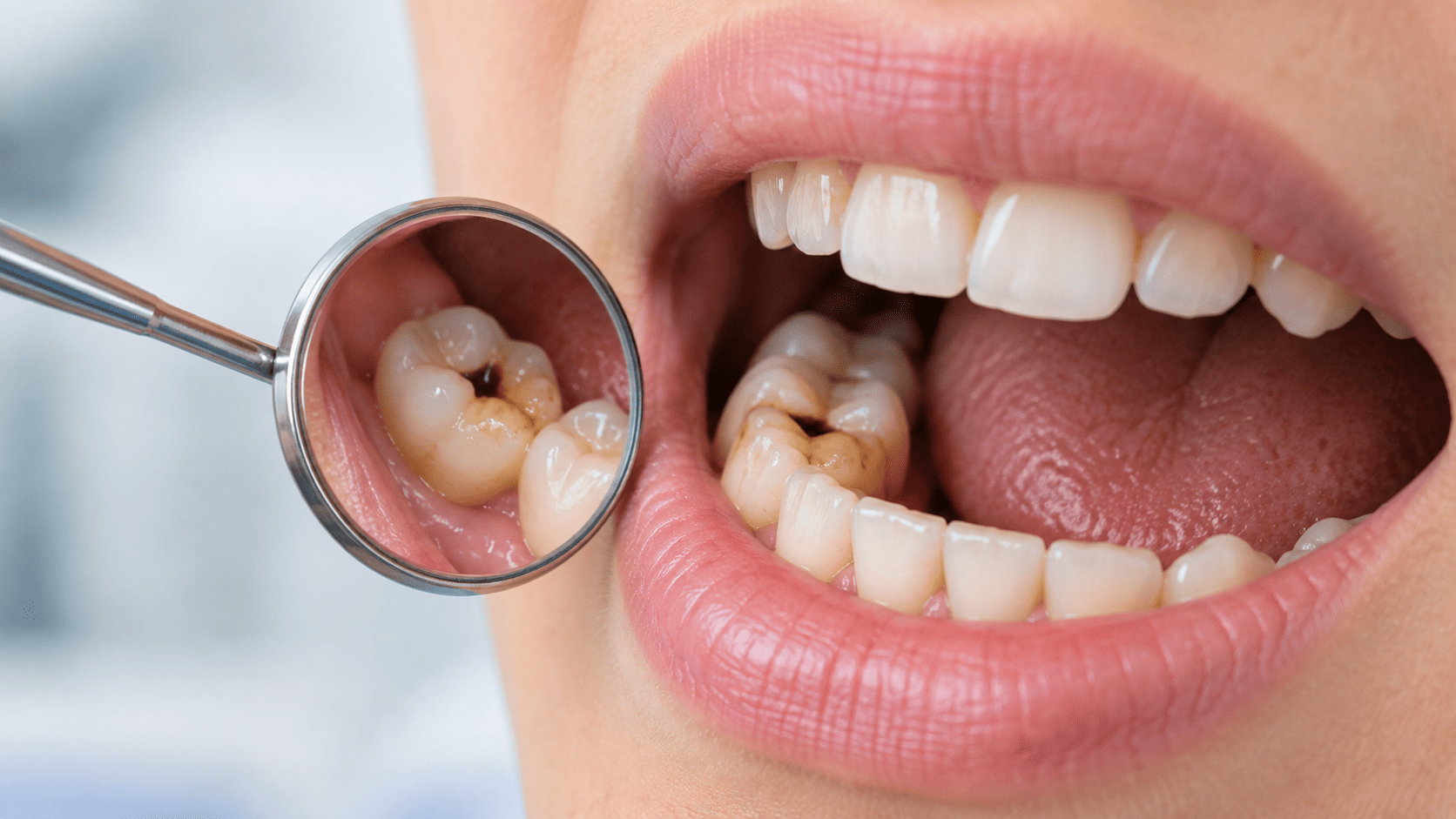
Teeth can become stained or discoloured for several reasons. Some stains develop on the outer surface of teeth, while others may develop inside the tooth.
- Age: Changes in enamel and tooth structure with age can make teeth appear darker.
- Tea and coffee: Regular consumption can gradually stain the surface of teeth.
- Tobacco and cigarettes: Smoking and tobacco use can cause noticeable tooth staining.
- Red wine and aerated drinks: These beverages may contribute to external tooth stains.
- Some mouthwashes: Excessive or prolonged use of certain mouthwashes may contribute to staining.
Internal Stains
Internal stains develop within the tooth and may not respond to bleaching in the same way as ordinary surface stains.
- Certain medicines such as tetracycline can cause staining.
- Conditions such as enamel hypoplasia can affect tooth colour and enamel appearance.
- Dental fluorosis may develop due to increased fluoride exposure.
- Trauma to a tooth during a fall or accident may cause discolouration over time.
Ways of Tooth Bleaching
Tooth bleaching can generally be carried out in two main ways:
- Home bleaching
- In-office bleaching
The suitable method depends on the condition of the teeth, type of staining and the amount of whitening required.
Home Bleaching
Home bleaching products are available in different forms such as toothpastes, bleaching gels, mouthwashes and other whitening products. Over-the-counter products usually contain weaker bleaching agents, so the results may take more time.
Dentist-supervised home bleaching may involve custom-made trays. Your dentist may take impressions of the upper and lower teeth and prepare trays that fit your mouth properly.
- A bleaching gel is placed inside the custom-made tray.
- The tray is positioned over the teeth.
- The dentist explains how long and how often the tray should be used.
- Treatment may continue for around 2–3 weeks depending on the case.
- Treatment should be stopped and reviewed if significant irritation or sensitivity develops.
Consult your dentist before starting home bleaching because incorrect use of bleaching agents can irritate the gums and surrounding tissues.
In-Office Bleaching
In-office bleaching is performed at the dental clinic under professional supervision. The bleaching material used in the clinic may contain a stronger concentration than products designed for home use.
Before bleaching, the dentist may perform scaling and polishing to remove plaque, tartar and superficial stains from the teeth.
- The teeth are isolated using cotton rolls and a cheek retractor.
- A protective barrier is applied around the gums.
- The bleaching agent is applied to the visible tooth surfaces.
- A suitable light source may be used depending on the bleaching system.
- The bleaching material is carefully removed after the required time.
Depending on the bleaching technique, a light such as LED, halogen or another suitable light source may be used during treatment.
A bleaching session may take approximately 30 minutes to one hour. Some patients may achieve the desired result in one sitting, while others may require additional sittings.
Precautions to Be Taken Before and After Tooth Bleaching
Tooth bleaching is a cosmetic dental treatment, so a proper dental examination is important before starting the procedure. Your dentist can check whether bleaching is suitable for your teeth and explain the expected result.
- Teeth may become temporarily sensitive to hot or cold after bleaching.
- During in-office bleaching, the gums should be properly protected.
- Areas with severe abrasion, enamel loss or exposed dentin may become sensitive during treatment.
- Tooth-coloured fillings, veneers and crowns do not whiten in the same way as natural teeth.
- People with gum recession or severe sensitivity should speak with their dentist before using bleaching products.
- Whitening results are not permanent and staining can gradually return.
- Regular smoking and frequent intake of tea, coffee, red wine or aerated drinks may stain teeth again.
- Children below 16 years of age should generally avoid tooth bleaching.
- Pregnant women should avoid elective bleaching unless advised appropriately by their healthcare professional.
When Teeth Whitening May Not Be Suitable
Teeth whitening does not work equally well for every type of tooth discolouration. Some stains and dental conditions may require another type of treatment.
- Internal stains such as tetracycline staining.
- A tooth that has become discoloured after trauma.
- Teeth with active cavities.
- Severe gum recession or exposed root surfaces.
- Known sensitivity or allergy to peroxide-based bleaching agents.
- Teeth with crowns, veneers or tooth-coloured restorations, because these materials do not change colour with bleaching.
If a tooth has become dark after trauma because the nerve inside the tooth is damaged, the dentist may need to examine whether root canal or another treatment is required before considering whitening.
Conclusion
Tooth bleaching can help improve the appearance of stained or discoloured teeth and make the smile look brighter. Home bleaching and in-office bleaching are commonly used methods, but the right option depends on the cause of tooth discolouration and the condition of your teeth and gums.
Before starting any teeth whitening treatment, it is better to consult a dentist. A dental examination can help identify cavities, gum recession, existing restorations or internal stains and determine whether tooth bleaching is suitable for you.