Tooth Pain After Eating Sweets: Is It a Sign of a Cavity?
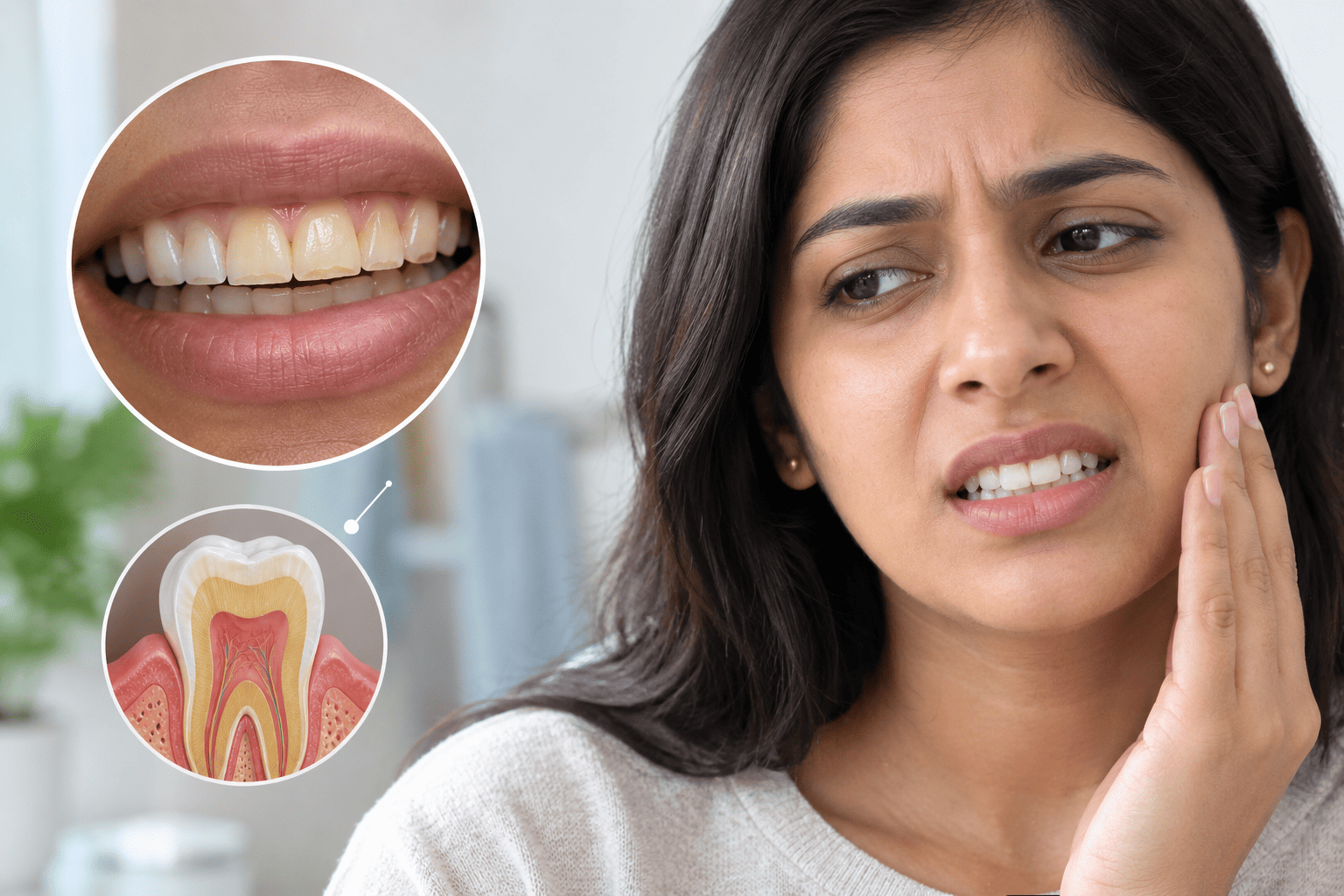
Have you ever felt a sudden tooth pain after eating sweets, chocolates, or sugary foods? Many people experience this discomfort but ignore it, thinking it is just temporary sensitivity. However, pain triggered by sweets can sometimes be an early warning sign of tooth decay, cavities, or other dental problems.
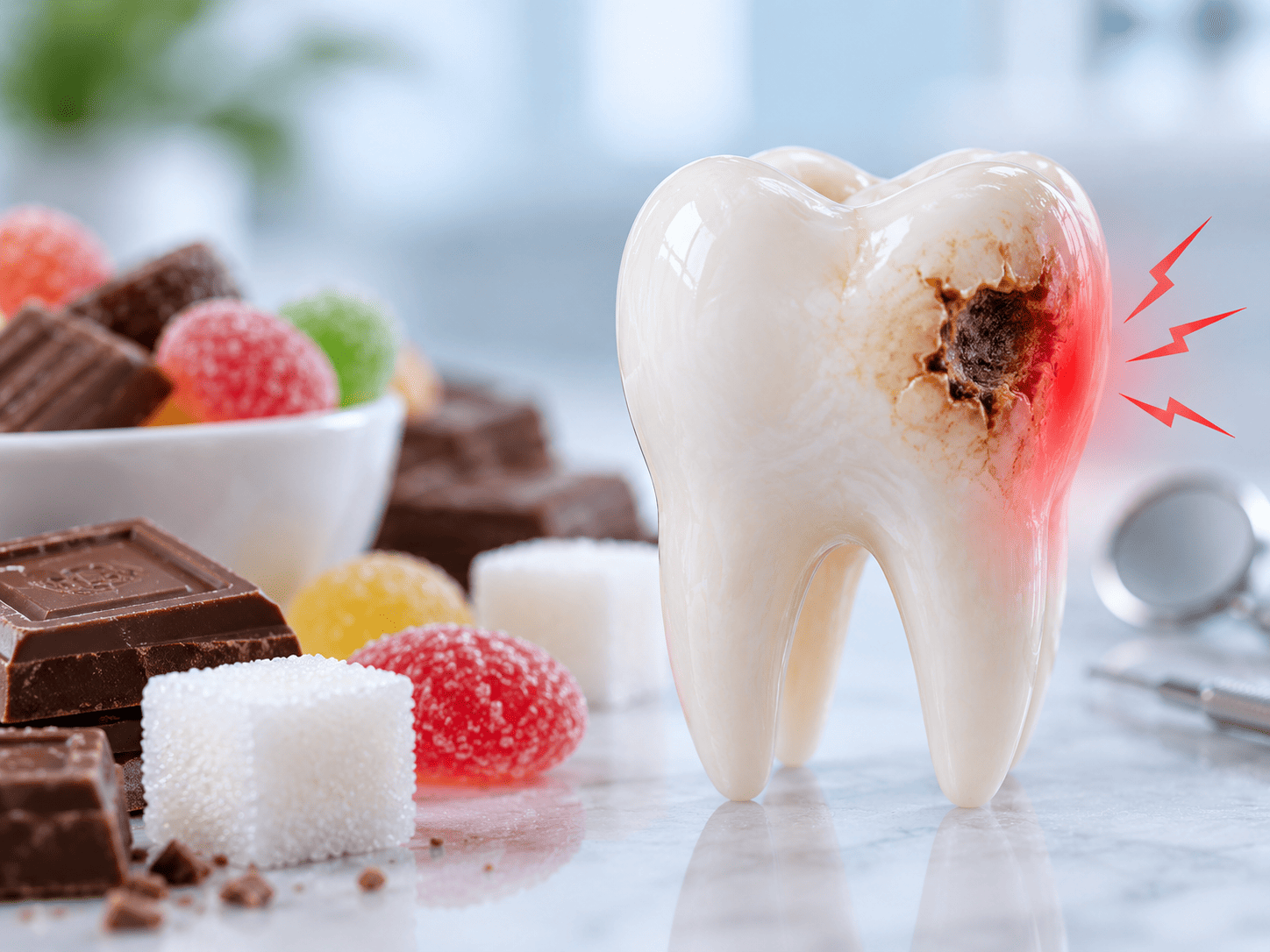
Sugar itself does not directly damage teeth instantly, but the bacteria present in your mouth use sugar to produce acids. Over time, these acids can weaken the tooth enamel and lead to cavities, causing sensitivity and pain.
At DentoXpert Dental Clinic in Thane, dentists often evaluate patients who experience pain while eating sweets to identify whether the issue is related to cavities, sensitivity, enamel damage, or another dental condition.
Why Do Sweets Cause Tooth Pain?
When you eat sugary foods, bacteria in your mouth break down the sugar and release acids. These acids gradually weaken the outer protective layer of your teeth known as enamel.
If the enamel becomes damaged or a cavity develops, the inner sensitive layer of the tooth becomes exposed. This allows sweet foods to stimulate the nerves inside the tooth, resulting in sharp or sudden tooth pain.
The pain may feel like:
- A quick sharp sensation after eating sweets
- Sensitivity that continues for some time
- Pain while chewing
- Discomfort with hot or cold foods
Is Tooth Pain After Eating Sweets Always a Cavity?
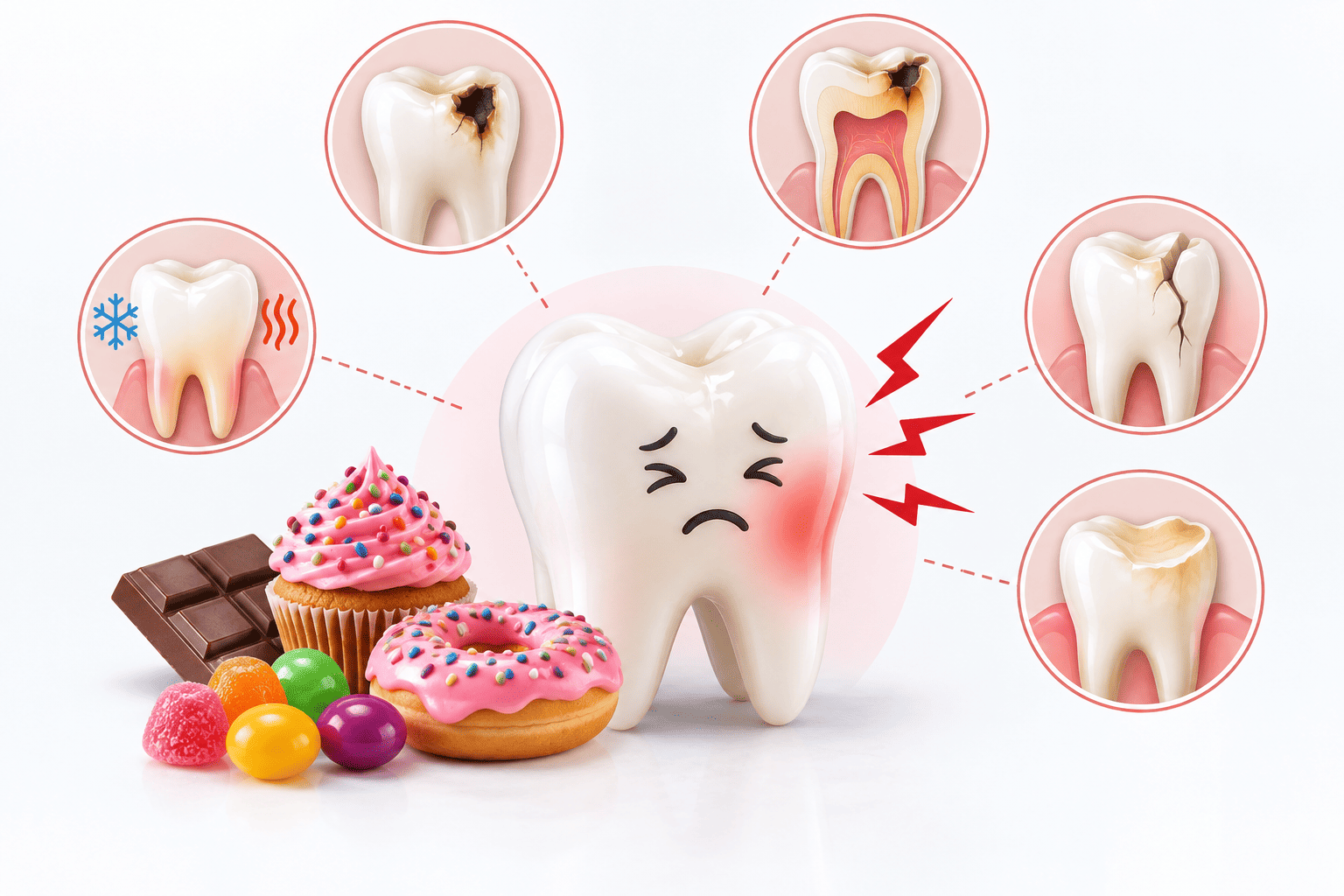
While cavities are one of the most common reasons for tooth pain after eating sweets, they are not the only cause.
Other possible reasons include:
Tooth Sensitivity
If your tooth enamel has become thinner or your gums have receded, the sensitive part of your tooth may become exposed. This can make your teeth react to sweet, cold, or hot foods.
Early Tooth Decay
In the beginning stages, cavities may not cause constant pain. However, sensitivity after eating sweets can be an early indication that decay has started.
Cracked or Damaged Tooth
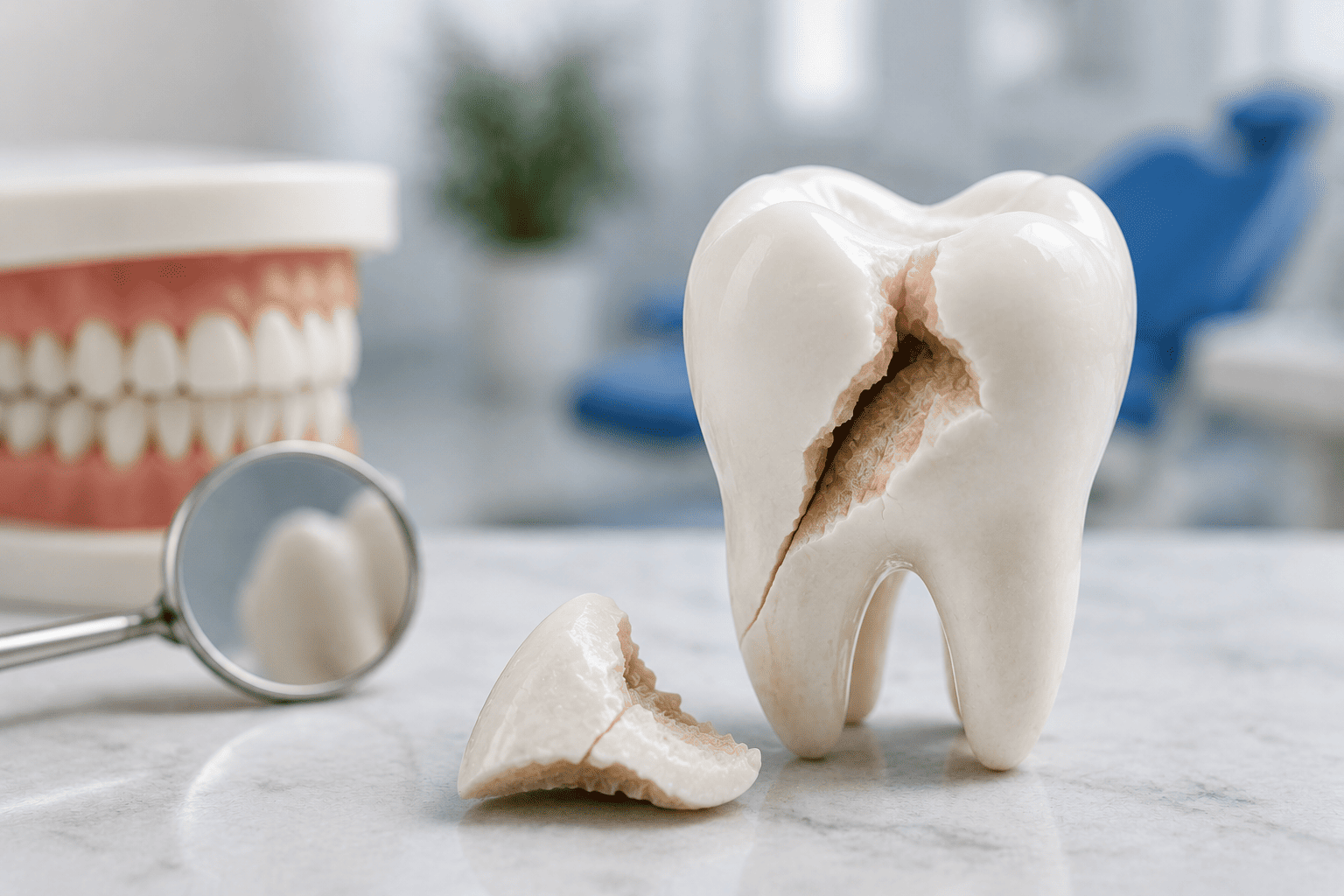
A small crack in the tooth can allow external triggers like sugar and temperature changes to reach the inner part of the tooth, causing discomfort.
Worn Tooth Enamel
Over time, excessive brushing pressure, acidic foods, or teeth grinding can wear down enamel and increase sensitivity.
Signs That Your Tooth Pain May Be Due to a Cavity
You may have a cavity if you notice symptoms such as:
- Pain after eating sweets
- Sensitivity to hot and cold foods
- Visible black or brown spots on teeth
- A hole or rough surface on the tooth
- Pain while biting or chewing
- Toothache that becomes more frequent
A small cavity is usually easier to treat, but if decay reaches deeper layers of the tooth, more advanced treatment may be required.
Can You Prevent Tooth Pain After Eating Sweets?
You do not always need to completely avoid sweets, but maintaining good oral habits can reduce the risk of cavities.
Some helpful practices include:
- Brushing twice daily with fluoride toothpaste
- Cleaning between teeth with floss or interdental brushes
- Rinsing your mouth after eating sugary foods
- Avoiding frequent snacking on sweets throughout the day
- Scheduling regular dental check-ups
Regular dental visits help identify early signs of cavities before they become painful.
How Is Tooth Pain After Eating Sweets Treated?
The treatment depends on the actual cause of the pain. If a cavity is detected early, a dental filling may be enough to restore the tooth and prevent further damage.
For deeper decay affecting the inner part of the tooth, treatments like Root Canal Treatment may be required to remove infection and preserve the natural tooth.
At DentoXpert Dental Clinic in Thane, dentists use a detailed examination to understand the condition of the tooth and recommend the most suitable treatment option for long-term dental health.
When Should You Visit a Dentist?
Consider scheduling a dental examination if pain after eating sweets keeps returning, becomes stronger, or occurs along with other symptoms.
- Persistent sensitivity to sweets
- Pain with hot or cold foods
- Visible dark spots or holes in a tooth
- Pain while chewing
- Toothache that becomes more frequent
Identifying tooth decay early can help reduce the risk of the cavity becoming deeper and requiring more extensive dental treatment.
How DentoXpert Can Help
At DentoXpert Dental Clinic in Thane, tooth pain and sensitivity are evaluated carefully to identify the actual cause.
Depending on the diagnosis, treatment may include Dental Fillings for cavities, sensitivity management, restorative treatment for damaged teeth, or Root Canal Treatment for deeper tooth decay .
The aim is to treat the underlying dental problem while protecting as much of the natural tooth as possible.
Conclusion
Tooth pain after eating sweets should not be ignored, as it may be an early sign of cavities, sensitivity, or enamel damage. Identifying the cause early can help prevent bigger dental problems and protect your natural teeth.
If you experience tooth pain after eating sweets in Thane, consult DentoXpert Dental Clinic for professional diagnosis and effective dental care.