What Is Sialolithiasis?
Sialolithiasis, also called a salivary gland stone or salivary gland calculus, is the formation of a calcified mass within the duct of a major or minor salivary gland.
The calcified mass formed inside the salivary gland or its duct is called a sialolith.
A sialolith can obstruct the normal flow of saliva through the salivary duct, which may result in pain, pressure and swelling of the affected gland.
Major Salivary Glands
There are three major salivary glands:
- Submandibular gland
- Parotid gland
- Sublingual gland
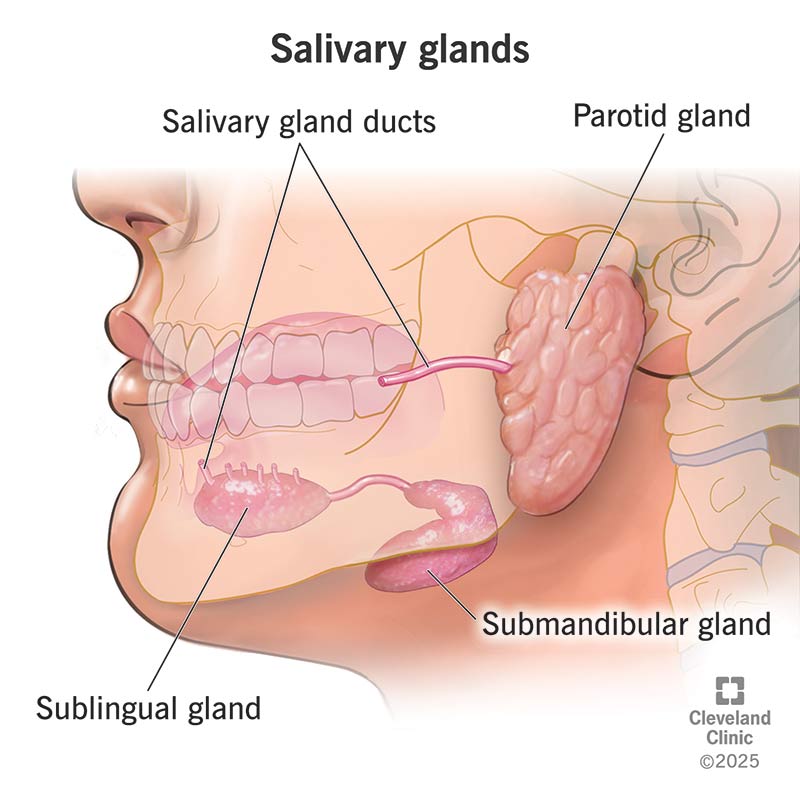
Which Salivary Gland Is Commonly Affected?
Of the three major salivary glands, the submandibular gland is most commonly affected by sialolithiasis.
- Submandibular gland: 83%
- Parotid gland: 10%
- Sublingual gland: 7%
Formation of a Sialolith
A sialolith is a calcified mass that develops within a salivary duct. When the stone is present inside the duct, it can interfere with the normal passage of saliva from the gland into the mouth.
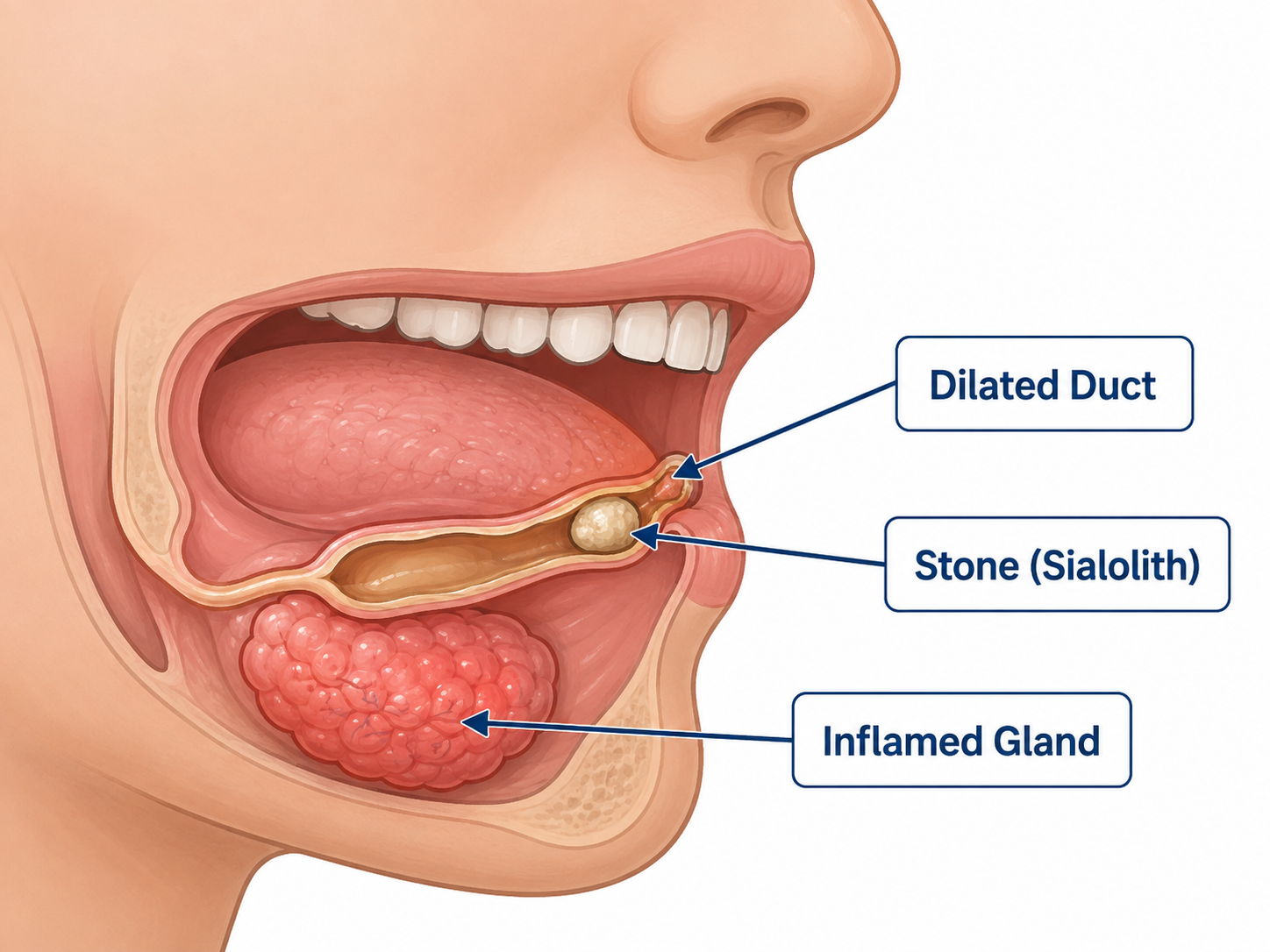
Signs and Symptoms of Sialolithiasis
- Sialolithiasis usually occurs in middle-aged men.
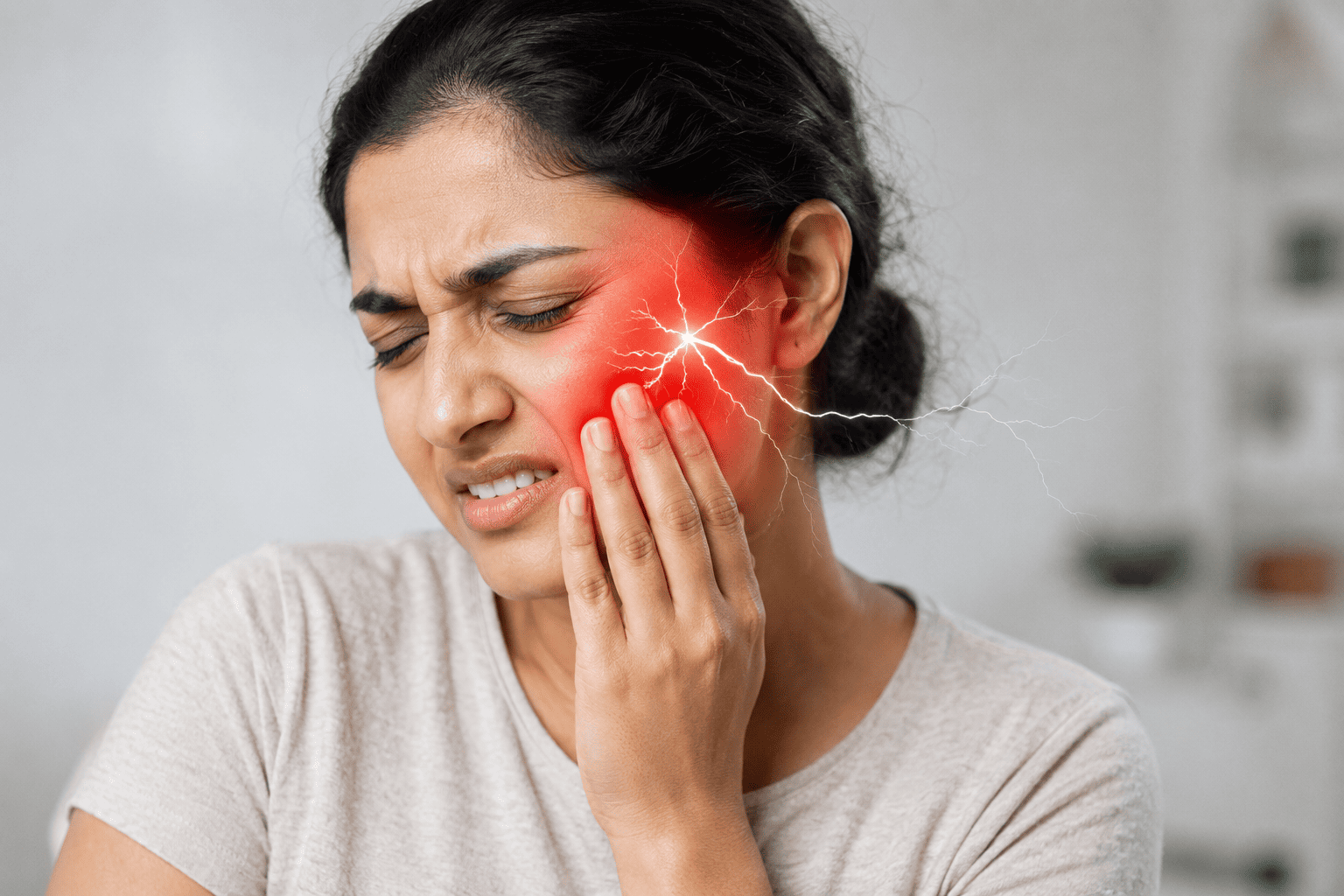
- A patient may complain of pain because the calcified mass within the salivary duct can obstruct the normal flow of saliva.
- Saliva may accumulate and stagnate in the affected area, producing a feeling of pain and pressure.
- A characteristic feature of sialolithiasis is increased pain and swelling while having food.
- Pain and swelling may reduce after meals when saliva is gradually able to pass through the available space in a partially obstructed duct.
- Sialolithiasis may also be associated with fever and weakness.
Why Does Sialolithiasis Cause Pain While Eating?
Saliva production normally increases during meals. If a calcified stone is present inside the salivary duct, the increased saliva may not be able to flow freely through the duct.
This obstruction can result in increased pressure, pain and swelling of the affected salivary gland while eating.
If the sialolith does not completely obstruct the duct, saliva may slowly pass through the available space after the meal. As the pressure decreases, the pain and swelling may also reduce.
Increased pain and swelling during meals is one of the characteristic features described in sialolithiasis.
Treatment of Sialolithiasis
Treatment depends on the location and size of the sialolith and the condition of the affected salivary gland.
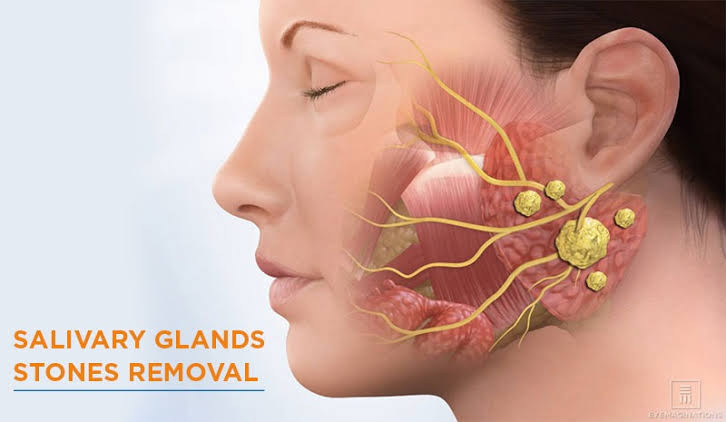
- If the sialolith is small, it may be manually removed by massaging the gland. This may help the stone come out of the salivary duct.
- If the sialolith is located near the opening of the duct, an incision may be given directly over the area so that the calculus can be removed.
- If the gland is infected and the patient has pus discharge or ulceration, the original article advises an antibiotic course.
- Lithotripsy may be used in appropriate cases, where the sialolith or calcified stone is broken into fragments and then removed.
Conclusion
Sialolithiasis is the formation of a calcified stone within a salivary gland duct. The submandibular gland is most commonly affected, and obstruction of saliva can result in pain, pressure and swelling, particularly during meals.
Treatment may range from gland massage for a small stone to removal through an incision or lithotripsy depending on the location and condition of the sialolith.
Frequently Asked Questions About Sialolithiasis
What is sialolithiasis?
Sialolithiasis is the formation of a calcified mass or stone within the duct of a major or minor salivary gland. The stone is called a sialolith.
Which salivary gland is most commonly affected?
According to the original article, the submandibular gland is the most commonly affected gland at 83%, followed by the parotid gland at 10% and the sublingual gland at 7%.
What are the common symptoms of sialolithiasis?
Common symptoms include pain, pressure and swelling of the affected salivary gland. Pain and swelling may become more noticeable while eating.
Why does a salivary gland stone hurt while eating?
Saliva production increases during meals. When a stone obstructs the salivary duct, the saliva cannot flow freely, which can increase pressure, pain and swelling.
How is a small salivary gland stone treated?
The original article states that a small sialolith may sometimes be manually removed by massaging the affected gland.
What is lithotripsy for a salivary gland stone?
Lithotripsy is described as a procedure in which the calcified salivary stone is broken into smaller fragments so that the fragments can be removed.